

PITTSBURGH_“It’s the power of not yet,” special education teacher’s aide Michelle Steiner told about 50 people gathered at the Center for Media Innovation at Point Park University.
“Just because somebody isn’t doing it now, doesn’t mean they are never going to be able to do it,” Steiner said. As a teacher in Butler, Steiner has taught this lesson to her students.
Steiner’s words were informed by Carol Dweck, a psychologist who popularized research about motivation, and why people do, or don’t, succeed.
Steiner was one of 10 speakers who participated in the Dis/Ability Show & Tell: A Community Symposium in October. She talked about her personal journey, which led her to educating a new generation of people with disabilities. Steiner has a learning disability, and eventually felt empowered to ask for accommodations, despite her fears of stigma. She earned an associate degree from community college, and a bachelor’s degree from Slippery Rock University, where she made the Dean’s List.
Throughout the afternoon symposium, the speakers presented videos, photos, and a dramatic reading of a personal essay to share their experiences. Speakers included:
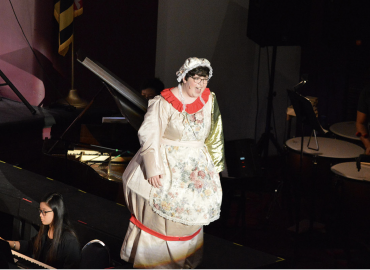
Emily Harnett, a theatre student in Point Park’s Conservatory program, shared her experiences of living with a physical disability, and working in a physically demanding field. Harnett read a spoken word piece she wrote about her diagnosis with Ehlers-Danlos syndrome, and her fear of not being able to perform on stage.
Tirzah DeCaria, co-founder of Creative Citizen Studios, strives to break down boundaries through art. She connects her group of artists, who have intellectual and developmental disabilities, with the broader arts community. She talked about the visual arts classes and workshops that her organization holds for people with disabilities.
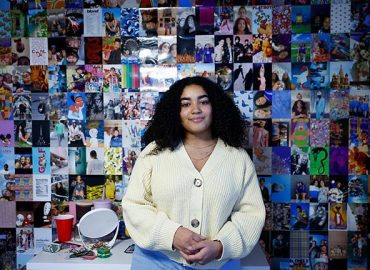
Jade Steele. Photo: Joseph Smith/Benevolent Photos.
An education student at Point Park, Jade Steele, presented information about the International Board of Credentialing and Continuing Education Standards (IBCCES) and Certified Autism Centers. These are organizations where “at least 80 percent of staff training is defined in the field of autism and is committed to ongoing training and autism,” Steele said. Kennywood Park, where Steele works, is newly certified She said being certified helps both people with Autism Spectrum Disorder, and businesses, which see an increase in revenue when they become more inclusive. Steele, diagnosed with both ADHD and autism, shared her dream to educate students with disabilities.
Point Park student Regan Tischler was diagnosed with narcolepsy and cataplexy in her senior year of high school. Cataplexy, Tischler says, is a loss of muscle control with high emotion, such as laughter. She jokingly described it as it appearing to be intoxicated. She also explained that narcolepsy isn’t randomly passing out in public. It’s living with the knowledge that sometimes, “you will feel like you haven’t slept in like three days,” she said. Other symptoms include lucid dreaming, sleep paralysis, and hallucinations, in more extreme cases.
Alicia DiGiorgi, Head of Production at the Pittsburgh Playhouse and one of the founders of the Pittsburgh Playhouse Accessibility and Inclusion Committee, spoke about the production she worked on under Bricolage Theatre Company, which led to the creation of the committee. She was inspired by the experiences she had with Bricolage, which has its own mission of inclusivity, and was able to get the funding and support needed to offer more accessible programming and services at the Playhouse. While it has been a huge undertaking, DiGiorgi said all of the work has been worth it. “I believe with an open mind, positive outlook, willingness to learn, a little bit of patience, and the proper support system, we can teach our future theatre makers how important it is to include everyone in the adventure [of theatre,]” she said.
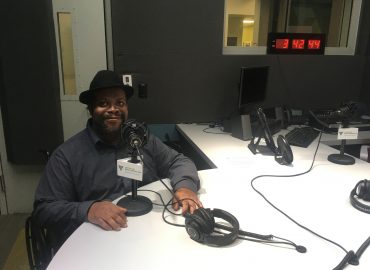
The afternoon ended with an on-stage interview by WESA-FM’s Bill O’Driscoll, who spoke with Point Park alumnus Brian Rutherford. Rutherford is a former Walt Disney World Entertainment costuming manager. At 38, Rutherford suffered four strokes, causing him to lose his eyesight. In a discussion with O’Driscoll, Rutherford talked about his current position as a costume stitcher with the Blind & Vision Rehabilitation Services of Pittsburgh. He also serves as an audio description coordinator and a consultant to theatres in Pittsburgh. Rutherford says he wishes to see younger people from the blind community in the wings, on stage, and in the audience. He said, “I want to have young people realize the arts can be an accessible thing.”
90.5FM WESA Reporter Bill ODriscoll. Photo: Joseph Smith/Benevolent Photos.
Center for Media Innovation graduate assistant Stacey Federoff and Unabridged Press’ Jennifer Szweda Jordan. Unabridged Press’ Look Who’s Here! founding host Erin Gannon, (who has Down syndrome), and Jordan (who has bipolar depression) also spoke about the beginnings of the All-Abilities Media Project–the work of this effort constitutes most of Unabridged Press’ work in the last few years and can be found throughout this website.
The symposium was inspired by a previous Halloween Symposium held at the center, later dubbed, “Decomposium.”
“At that event, students and staff shared research, choreography about ghosts, and short horror films. I thought, ‘Let’s do a symposium about disability–a kind of show and tell about disability,’” Jordan said. “So, it’s an incredible privilege to have been part of making this happen.”
Rianne Lindsey, who wrote this piece and appears in a video above as a participant in the symposium is a theatre student at Point Park. She spoke about the future of inclusion of people with disabilities in theater.
The Dis/Ability Show & Tell was made possible with help from Point Park graduate assistant Stacey Federoff, the school’s Center for Inclusive Excellence, and funders, including the FISA Foundation.
Photo of a man dressed as judge who has various symbols representing the legal field, along with the rainbow infinity symbol representing the autism spectrum. Photo Illustration: Alex Collinger.
PITTSBURGH_Detention guards didn’t know why some incarcerated kids were biting and pinching their own arms and legs, pulling at their ears, and otherwise mutilating themselves. The youths were autistic.
“When we went in, it was just very apparent,” says psychologist Tammy Hughes. “But because (officers) hadn’t had the training, because they didn’t know what autism looked like, it was misunderstood.”
People with autism spectrum disorder [ASD] are seven times more likely than peers to be either crime victims–or suspected or actual perpetrators.
Listen to Hughes’ conversation with students at Joey Travolta/Arts for Autism Film Camp by pressing the red button with the white arrow.
Hughes trains police, judges, lawyers, and guards to recognize and address autism. She reminds people that autism is not synonymous with violence. This article is drawn from those conversations. Her training materials have been presented to over a thousand judges. But work remains.
It starts on the streets, sometimes in surprising ways. Hughes describes a case in Ohio, in which a young male with an affinity for blankets entered a house to check out a neighbor’s blankets.
“In some window there was a blanket over a chair,” she says. “The door was open. He went in and was touching the blankets. Now, the people there were home and it did scare them. Quite seriously. But it was breaking and entering technically, but his motive for breaking and entering is not the same motive as you would see for somebody trying to steal…he didn’t steal anything.”
Yet the act was illegal and Hughes says that it isn’t just law enforcement that needs to be trained, but individuals with autism as well. This person, she says, needed to be able to answer the question, “How do I get my needs met in a way that’s not illegal?”
A single run-in with the police, even as a juvenile, can be enough to disrupt a person’s life. With a criminal record comes social stigma, barriers to housing and employment, and even longterm health problems. And studies show that the criminal justice system–from policing, to the courts, to correctional facilities–isn’t set up to address, consider, or even recognize ASD among youth.
Additionally, children can be charged and convicted as adults in court, depending on the details of the case. Hughes knows of kids as young as 14 who have been tried as adults in Allegheny County. Add immaturity on top of disability, and the outcome can be disturbing.
“My whole job is to keep kids out of jail and in school,” says Tammy Hughes, a Duquesne University professor in the Department of Counseling, Psychology and Special Education. “A lot of the screenings in juvenile justice really only look at psychiatric problems and not at developmental disabilities.”
Take, for example, a routine traffic stop. Loud sirens, flashing lights, and a uniformed officer are frightening for most anyone. For those with ASD, it can feel especially overwhelming.
Similarly, a police pat-down could cause an autistic person to flee or lash out. Suddenly a speeding ticket may escalate to a charge of resisting arrest or assault, all because the individual can’t negotiate the interaction and the police officer lacks the training to recognize autistic behavior.
“They look very criminal when they really are not,” Hughes says.
This miscommunication can also extend into the courtroom, says Hughes. A juvenile offender may appear to a courtroom and judge as angry, aggressive or lacking remorse.
“You can’t punish a child with a disability for a symptom, a trait of their disability” in a school setting, says Hughes, “but there’s no equal partner to that in juvenile justice.”
This article is based on conversations with C.S. Wyatt, host of The Autistic Me podcast, and Amanda Alcorn and Evan Koepfinger, students at Evolve Coaching’s Joey Travolta/Arts for Autism Film Camp.Click below for full audio and transcripts.
The All-Abilities Media Project is a collaboration between Unabridged Press and the Center for Media Innovation at Point Park University in downtown Pittsburgh. The author, Brian Conway is a freelance reporter. His environmental reporting was awarded in the Society of Professional Journalists’ Keystone Chapter Spotlight contest. His work has been published in Motherboard, October, and the Chicago Tribune. @BrianConwayyyyy
After an antisemitic assassin murdered 11 worshippers at the Tree of Life synagogue in Pittsburgh, the story of Cecil and David Rosenthal spread. The brothers both had intellectual disabilities and were as much a part of the congregation and the neighborhood as anyone. The belonging they experienced is exactly what happens every day at The Friendship Circle, started by Rabbi Mordy and Rivkee Rudolph. Rabbi Rudolph answered Jim Shirley’s questions about the nonprofit, located in the same neighborhood as the shooting. Their conversation is part of the All-Abilities Media Project. The transcript, and more about the project, are below.
SHIRLEY: [00:00:00] Thanks for speaking with me today. Can you just start off by telling a little bit about yourself? [00:00:05][5.6]
RUDOLPH: [00:00:06] Sure. Thank you. Thank you for having me, Jim. So my wife Rivkee and I start– founded The Friendship Circle of Pittsburgh in 2006. We came at it from a unique perspective we like to say in that my wife was a preschool teacher at the time and I was a newly ordained rabbi. And we’re both from Pittsburgh. We have–grew up Orthodox here. And to us, there was a lot of need for a program like The Friendship Circle in Pittsburgh. It’s a model that we’d seen in other cities. We’re free to kind of it’s our own our own independent organization. But because that was the–because that was the case, it gave us the freedom to be able to do it the way we wanted to do it, essentially. And we had seen, again, seen the model, knew–known that there was a need, particularly in the Jewish community, to create programming for people with disabilities. And now The Friendship Circle extended well beyond just the Jewish community. But at the time that was the perspective we came at it from. And we founded it then…and it really was what spoke to us was was, as I was saying earlier, how it’s really about enhancing an entire community. It’s not just about helping people with disabilities, so to speak. It’s about making an entire community better, regardless of whether a person has or does not have a disability. And what was what we found, what we what we saw as the uniqueness to us was that we really didn’t have any real previous exposure to people with disabilities. It wasn’t like we grew up with a close friend or relative who had a disability that really touched us or affected us. And to us it felt like we grew up with this–the mantra of love for your fellow man and that was such a basic tenet was in Judaism. And at the same time, the people we knew growing up are really just all people who are a lot like us–certainly superficially. And so to be able to go beyond that social circle was something we felt like was was a mission of ours in a way. [00:02:13][126.6]
SHIRLEY: [00:02:14] All right. Thank you for that. Can you just describe briefly how does Judaism fit into the Squirrel Hill community? [00:02:21][7.2]
Photo: The Friendship Circle of Pittsburgh.
RUDOLPH: [00:02:22] It’s hard to, I guess, fully define that. But what I will say is that Squirrel Hill is just known as being the center of the Jewish community, even though in somewhat recent history the Jewish community is extended out into some of the suburbs. But regardless, the the Jewish community has always been in Squirrel Hill. It’s it’s special for a number of reasons one being that it’s it’s always been the Jewish community and even though there are other communities, whether it’s the Hill or East Liberty that have kind of gone had their ups and downs in terms of Jewish life in those those neighborhoods and communities–Squirrel Hill, it’s always been here. And the other thing that I always say is interesting about Squirrel Hill is how it doesn’t just have one denomination of Judaism that they say they say about it in general about folks with, you know, from from a certain, ah–when you talk about their financial ability that someone could grow up pretty modestly in Squirrel Hill, make millions and millions of dollars and buy a house down the street because it’s like that. And I would say so from the Jewish community perspective as well, and that someone could be Reform and then decide to become Orthodox. Or or vice versa and buy a house down the street. And it’s really not… Whereas in many other cities, the Jewish communities, oftentimes the Orthodox communities in one neighborhood and the more Reform or more secular community is in another neighborhood. You don’t find that in Pittsburgh to be the case as much. [00:04:02][100.1]
SHIRLEY: [00:04:04] Yeah, it’s special. So what opportunities are on your calendar right now at Friendship Circle? [00:04:10][6.4]
RUDOLPH: [00:04:11] I’d say every opportunity really is on the calendar. We have everything from holiday events, cooking programs, Shabbat dinners that everyone is obviously welcome to a dance club or a yoga event. We do a boys night sports league. We have bowling parties and bowling in my bowling club in the South Hills. And then we do a number of events for moms and dads, programs for moms of our members or dads of our members to get together and socialize. And then there are also opportunities for folks to understand the mission of Friendship Circle in the background of what it’s all about and realize how the way we would like to portray this is, as I say, as it as a community organization is not necessarily something that would have always been the case. And that, you know, not that long ago, people disabilities were much more marginalized than they are today. And how, yes Friendship Circle does seem like it could be a normal thing, but we have to make sure that we take those steps to ensure that it stays that way and that society has progressed a lot recently. But not that long ago, we had these kinds of state institutions and such that that we need to make sure never to go back to. [00:05:28][77.1]
SHIRLEY: [00:05:30] Right. My next question is, can you say more about how Friendship Circle specifically helps people to grow, to contribute and belong. [00:05:40][9.9]
RUDOLPH: [00:05:41] So because as I said earlier, we try to–we don’t have the model of volunteers helping kids or members or special friends, so to speak, that they do in other places and other organizations. But everyone is a member. It really allows for everyone to gain tremendously from the organization. And no one sees themselves as as as clients. No one sees themselves as projects, as cases. All things that most of us don’t want to be. We want to be able to to be contributing members of society and valued. And so because of that, it allows for people to to maximize their their experiences here and realize that that these aren’t just volunteer opportunities where you go for an hour and you help some unfortunate person, but you’re going to come here and the reason why we’re not charging you or charging your member a fee, which is a philosophy of ours, that we don’t charge anyone for any of our activities–the reason we do that is because we can’t really put a number on on the amount that you’ll gain from this experience. [00:06:47][65.7]
SHIRLEY: [00:06:48] Aright–a follow up question. Are you or your organization involved in any social action related to disability? [00:06:57][9.2]
RUDOLPH: [00:06:59] How do you mean by social action? [00:06:59][0.8]
SHIRLEY: [00:07:00] Civil rights–you know, like petitioning local government. [00:07:03][3.3]
RUDOLPH: [00:07:04] Right. So. So we don’t. I’d say we don’t necessarily get involved directly in in terms of that type of of of like lobbying or whatever. What we do do is is part of that training that I’m talking about. And giving folks the background of what Friendship Circle is about is encourage everyone to be an advocate. We do a training track to many of our teens about advocacy, about things that are near and dear to them. For many of them, it relates to disability rights, for many of them, it relates to mental health awareness. It’s just about teaching the the this next generation of teens, of young people that if there’s something that they’re passionate about, they they don’t have the luxury to sit back and just watch it. But to really get involved and do something about it to whatever degree that means, whether that means, as many of our teens were involved in the vigil right after the shooting in October, just just, you know, roll your sleeves up and do something. If you if you see a need for something, do it. [00:08:02][58.1]
SHIRLEY: [00:08:03] Now, can you tell us about the Rosenthals connection to The Friendship Circle? Maybe share an anecdote or two [00:08:09][6.5]
RUDOLPH: [00:08:11] So I didn’t really know David well. I’d met him, but I don’t really I didn’t really know him well and see. So I did. Cecil had come around to some of our programs and signed up and wanted to volunteer. And it was what was interesting was to us was how he always he always wanted to help out. And he was always very outgoing and came to some of our young adult programs, but really wanted to help more. So wanted to come to some of our programs for for kids. And I really wish I would say that that Cecil and David were more involved in Friendship Circle surely. But what was interesting was how they really didn’t need something like Friendship Circle. And they were kind of the the outliers of their day because so many of their peers, so many adults who may have had disabilities and were of the same age range would have been in an institution and would have been somewhere not involved in the community, and isolated and not having friends. And they weren’t in that at all. And they really felt a sense of belonging in our community. They were part of our community. And that was what really kind of made that was the lesson that we’d like to take, certainly as an organization from from their lives. [00:09:25][74.1]
SHIRLEY: [00:09:28] Yeah. The next question that is going to be asked related to that is how is the community here at Friendship Circle celebrated their legacy? [00:09:39][10.3]
RUDOLPH: [00:09:40] So that’s that’s a lot of it. I mean, I would say a lot of it is this sense. And there was a number of… There was an article written about it shortly after their passing about how we’ve moved from acceptance of people with disabilities into integration, into inclusion, which is kind of the common phrase used today. But we now need to move into another level which is belonging, and how it’s it’s not enough to take the action to include someone in the community whatever aspect of the community we are doing so in. But to do–to move now to the next level and making sure that everyone really feels a sense of belonging. And we’re not making special accommodations to include them, but that they naturally should–should belong. So we try to promote to our our young people as much as possible about the need for for universal design and things like that. What we’ve done this year, actually a new bit of a new initiative for us is ensuring that we have more of a presence in greater community events, because obviously, like I said, we have a number of standalone activities that we provide. But those are all a means to an end, really a means to be able to allow for our members to be part of the greater community. And at a typical Rosh Hashanah event, let’s say that happens as much as we have our own pre-Rosh Hashanah event at a typical Rosh Hashahah event or at services, we should do our best. And obviously we’d like to think that we’ve we’ve made some inroads in this–but to make sure that everyone’s welcome all throughout the community and not just welcome, but really, truly belongs. [00:11:11][90.9]
SHIRLEY: [00:11:13] Thank you. And how did Jews include people with disabilities in general, and why is this important to Jews? And could you speak about autism specifically? [00:11:26][13.3]
RUDOLPH: [00:11:29] I’d say it’s hard to specifically delineate autism, but I’ll speak about–well, I’ll share one anecdote on autism and relating to people with disabilities. People with disabilities should and could be included completely within the Jewish community. And the idea of of of inclusion in general, of of a committee of a community, the idea of a congregation, which is really what the importance of what a Jewish community is. And when we talk about conversion, for example, a large part of conversion is living within a Jewish community. You know, the rituals are important, but the community aspect, an element of what of what of what Judaism is is of just tremendous importance. So if we’re going to be a community, a community needs to be inclusive and needs to make sure that that we make room not not not even make room, that we are available and that we are open and that we include those regardless of their of their differences or disabilities. I will say that I saw a clip of a bit of an interview and it wasn’t quite an interview it was an interaction between a parent and of a child with autism and …Sharabi (name unconfirmed) And … Sharabi’s a mentor of mine and was a lot of the inspiration for the founding of Friendship Circle. And the interaction with these parents who came to the rabbi and asked for a blessing for their son who has autism. And the rabbi’s response was that perhaps how he interacts with his peers may be different and may be something that’s, you know, it it it obviously causes these differences, which is what you know, which is what we know, what you may call autism. But regarding how he interacts with God almighty, that is not that there is no difference. And so, therefore, we need to ensure that he has that that he is treated as such and he is a part of the community as such. [00:13:31][121.9]
SHIRLEY: [00:13:32] This year’s marking the 30th anniversary of the Americans with Disabilities Act. And what does that read for you here at Friendship Circle? [00:13:43][10.9]
RUDOLPH: [00:13:45] The 30th year or the American American with Disabilities Act in general. [00:13:48][2.6]
SHIRLEY: [00:13:49] Like this is a landmark. Yeah. Thirty years. What has that meant for you? [00:13:53][4.0]
RUDOLPH: [00:13:53] So first of all, I’ll say that it feels like 25th year was yesterday. So it means the time is flying. That’s that’s number one. But number two is really this is a lot of what we’ve been taking some time to study has been how the impact that something like the ADA has had on society stemmed largely from the history of wars and veterans and how you had people who didn’t–didn’t necessarily know what it was like to have a disability and suddenly they came back from a war and they did. And that, in turn, caused them to stand up for themselves and say, no, I’m not going to not go into that restaurant anymore because there is no wheelchair ramp. I’m gonna figure out how to get in there. Those were the stories that led to the ADA. So for us, what it means is that that that the mandate, if you will, of not resting on our laurels and not saying, ‘Oh, we’ll just because we do something a certain way, you know…’ For many families, for example, who have a child with a disability or for someone who himself or herself has a disability, you kind of resort to ‘Well, this is just how it is and what we have to realize is that if that person would have known that they–he or she would be accepted in these circles and suddenly the change this this this shocking change happens that now suddenly you’re no longer accepted in this setting, they would have never been OK with it. But because sometimes it’s just ‘This is this is just the way it always has been and the way it always will be,’ they they they resort to that. But what we have to realize certainly to us as an organization is that everyone who who who is given the opportunity to belong, we would like to do so. They just sometimes aren’t–aren’t aren’t familiar with it, and that’s that’s our fault, our collective fault as a community. So we need to do our best to make sure it’s not the case. [00:15:54][121.3]
SHIRLEY: [00:15:56] What are your aspirations for greater inclusion at Friendship Circle and beyond Friendship Circle? [00:16:05][8.8]
RUDOLPH: [00:16:07] When I spoke recently to someone who asked me who was a very data-driven organization he’s part of. It’s a foundation and we were discussing potential funding and he said, what is your saturation point as an organization? If it were about involving people with disabilities, in Friendship Circle I could say, ‘You know, they’re X amount of people wotj disabilities in the community. And I want this percentage of them to be part of Friendship Circle.’ But that’s really not what it’s about. As much as that number grows, as much as our membership does grow and our programs grow. It’s really about ensuring that the entire community becomes more inclusive. And I had the pleasure of several months ago of being out for lunch where a mom came up to me and said how she has a son who has a disability and is no longer a current member at Friendship Circle. He had been several years ago, but is no longer part of Friendship Circle. And she said, ‘I have to tell you that what you’re doing in this community has been absolutely tremendous for my son.’ And she said, ‘Yeah, I know he doesn’t come to programs and he’s not as involved,’ she said, ‘but the way that young people look at him is totally different than they used to.’ And to me, that’s a realization of what our mission is all about. So it’s about the community as a whole being a more inclusive and a better one. And it’s it’s really hard to say … at what point we say, OK, we’ve done it because there’s always just so much more to do. [00:17:35][87.7]
SHIRLEY: [00:17:36] Okay. Thank you. Before I close the interview, I just want to make a comment of my own–you can respond if you want. But last year when I started my conversion to Judaism, as well as getting involved with the autism community, I found this Web site called realsocialskills.org And it has a lot of articles about interacting with people who are disabled, particularly autistic. And it also had a number of articles about Judaism and Jewish culture. And I just thought that was interesting. There was that intersection of Judaism and autism. And yet it seems from my reading of the Old Testament, the Jews would, like, take care to protect those with disabilities, like ‘Curse, like the one who puts a stumbling block for the blind…’ You know, from recent history of the Holocaust, my understanding is that disabled people were placed in the camps alongside Jews. Seems to me that connection, both Biblically and historically that Jews have had with disabled people… [00:18:54][78.0]
RUDOLPH: [00:18:55] There is definitely that unfortunate–for better or for worse, when there are marginalized populations. The Jews end up being part of them. And that’s there’s definitely a familiarity with that. [00:19:04][9.2]
SHIRLEY: [00:19:05] OK. Well, this has been Jim Shirley here at Friendship Circle with Rabbi Rudolph. And yeah, thank you for your time. [00:19:15][10.4]
RUDOLPH: [00:19:16] Thank you. [00:19:16][0.0]
THE ALL-ABILITIES MEDIA PROJECT AT THE CENTER FOR MEDIA INNOVATION AT POINT PARK UNIVERSITY IN DOWNTOWN PITTSBURGH AND UNABRIDGED PRESS PROVIDE MEDIA WORKSHOP EDUCATION, EVENTS, AND PROFESSIONAL PRODUCTION OPPORTUNITIES. THIS WORK IS FUNDED IN PART BY THE FISA FOUNDATION
Arts reporter Bill O’Driscoll. Image: Joseph Smith/Benevolent Photos
PITTSBURGH_Ballet fans with vision impairments touched poseable dolls and even dancers themselves before performances to get a better sense of what would happen on stage.
“They would let the sight-impaired folks…know what the different positions of the dancers were,” says 90.5 FM WESA’s Bill O’Driscoll, a longtime arts reporter says in a recent interview. “So when they heard the audio descriptions and they would say the ballerina would make a certain move, they would be able to picture it better in their heads.”
This pre-show opportunity for blind patrons took place several years ago. But O’Driscoll says it was one of the best examples he’s seen of making theater accessible.
“It was really moving, and it was a really an inventive, creative way, I thought, to help new audiences experience the art form,” O’Driscoll says. O’Driscoll says cultural offerings are becoming more accessible throughout the city.
O’Driscoll shares this and other stories in a wide-ranging interview with Darrel Pullie and Joseph Smith–the two participate in the Unabridged Press’ All-Abilities Media Project held at Evolve Coaching’s Joey Travolta/Arts for Autism Film Camp and at the Center for Media Innovation at Point Park University.
Since Pullie and Smith are aspiring filmmakers, they ask O’Driscoll about Hollywood films being made in Pittsburgh and the impact on the city’s film community. O’Driscoll mentions some of the best-known projects filmed here were the Night of the Living Dead and Dawn of the Dead in the 1960s.
“The way it impacts the film community obviously is it creates jobs, it creates opportunities for people …crew especially,” O’Driscoll says. ”When you’re watching a movie you’re only thinking generally of the actors, maybe the director, but really behind the scenes there’s these big crews of people.
Co-interviewer Darrel Pullie at the Center for Media Innovation at Point Park University.
Image: Joseph Smith/Benevolent Photos
Dogma was shot in 1999 in Pittsburgh. More recently, The Dark Knight Rises and other films brought opportunities for aspiring local filmmakers. Aside from the actors and directors, the shoots offered work for videographers and editors who were able to practice their craft behind the scenes. O’Driscoll never worked on films professionally but he did try his hand as a film student in order to prepare for his beat.
In addition to working for the Pittsburgh City Paper, O’Driscoll freelanced for The Nation and the Pittsburgh Post-Gazette after graduating from Northwestern University’s Medill School of Journalism. O’Driscoll covered hard news started in the early ’90s. Later, he wrote freelance film reviews for the Pittsburgh City Paper until 2003.
“A guy that I knew was the editor of Pittsburgh City Paper and they had a staff movie reviewer position,” O’Driscoll says. “The previous person left and he asked me if I wanted to do it. I didn’t really have that much experience writing about the arts but I said, ‘Sure!’”
The editor position introduced O’Driscoll–and his readers–to literature, dance and the theater arts. In February 2018, O’Driscoll transitioned from print to radio. He admits the new technology and style of writing have been challenging.
“I found just by repetition and working on projects and keeping at it… It becomes intuitive and a lot like muscle memory after a while,” says O’Driscoll. “You write for the ear rather than the eye.”
Even though this may be a dream job for some, O’Driscoll admits that it is not the easiest. He says there aren’t a lot of full-time gigs available. Many online outlets are staffed by stringers. O’Driscoll says that freelancing offers many reporters experience and opportunities.
“It’s a lot of fun,” O’Driscoll says. “There’s a lot going on in Pittsburgh and I’ve been very fortunate to make a living doing that for a decade and a half.”
This article was written by Jennifer Szweda Jordan and Point Park University broadcast production student Brianna McCall. The interview and writing were supported by a grant from the FISA Foundation supporting people with disabilities in southwestern Pennsylvania.
LISTEN! PRESS THE WHITE ARROW IN THE ORANGE CIRCLE AT TOP LEFT.
When James Coke was in his twenties, playing soccer suddenly made his left leg weak. Even walking became so painf, doctors confirmed what Coke suspected–he had Multiple sclerosis.
The diagnosis enhanced Coke’s passion for cooking, and for encouraging others to get in the kitchen for improved health. He branded himself “The Disabled Chef” and started blogging. The name “The Disabled Chef” was partly a play on words because of statistics that while the average person is not disabled, they are unable to cook more than six dishes from scratch. On the site, you’ll find recipes for low-cost meals like Pumpkin Soup and Spaghetti Bolognese.
“I’m not saying cooking has cured me from primary progressive Multiple Sclerosis (Ppms), it hasn’t–that’s confined me to a wheelchair,” Coke writes on his website. “But 20 years on from diagnosis, I’m still punching above my weight, holding the line and fueling my body the home-cooked way.”
In an interview, Coke dished on his mom’s cooking, climate change, and medical marijuana. He spoke with Darah Thompson–who is curator of The Sweet Remedies online bakery based in Pittsburgh.
Since Thompson’s focus is desserts–most of which contain spirits like Hennessy in cinnamon buns–she asked Coke about his preferred sweets. One favorite is his wife’s blueberry baked cheesecake. They even add clotted cream, which, he half-jokingly adds, could cause a heart attack. His website also has a list of other treats.
And while American pies are more often considered dessert, that’s not the case across the pond. Coke says his mother cooked lots of savory English pies.
The vegetable curry that appears on The Disabled Chef website.
“There’s a couple recipes on my website for steak and ale pie, and she used to make a lovely, lovely pork pie,” he says. “She used to make great crumbles.”
Yet Coke doesn’t eat as much pork pie as he used to. His colorful curry vegetable recipe (pictured) is one way he tries to reduce the use of foods that may be less of a drag of the planet. Exotic dishes and spices like curry inspire him.
“In society, we eat too much meat. I think we all have the opportunity to change,” Coke says. “The world is getting immersed by Co2, much of which is due to farm animals’ flatulence, so this dish is not only nice and healthy but good for your carbon footprint.”
In his writing and videos, Coke also discusses universal kitchen design. His adjustable stovetop cranks up or down to accommodate his height seated in a wheelchair and that of his wife, who sautees while standing up.
Coke grew up eating local produce and eating fresh vegetables from his home garden that his parents would prepare. He still likes supporting local markets and maintaining a balanced diet. That doesn’t mean he’s not a fan of desserts.
James Coke. Image Provided.
Besides writing about cooking, Coke’s a vocal advocate for medical marijuana. His writing on the subject is published in The Guardian.
Coke says America is “light years ahead of where we are in the U.K.” in legalizing medical marijuana.” He says the only licensed cannabis drug in his home country is very expensive.
“It’s the one thing that is really good for my body,” Coke says of marijuana. “My spasms are better at night, I can sleep a lot better… it gives me more of an appetite.”
Although Coke doesn’t use cannabis in his cooking, he says he might try it. A new muffin recipe might even be featured on his website.
Sweet Remedies curator Darah Thompson is based in Pittsburgh.
The Center for Media Innovation at Point Park University in downtown Pittsburgh enables us to train people with disabilities in media and to publish their work. Free workshops are supported by The FISA Foundation.
If you watch Molly Burke on YouTube, you’ll learn about her birth control horror story, skydiving, and fashion. Her ‘Blind Girl Story Times’ may also grab your attention.
Molly Burke is a Canadian native who was diagnosed with retinitis pigmentosa (RP), at age 4. She lost the majority of her sight within 10 years. Burke is now a full-time YouTuber, public speaker, and advocate for people with disabilities. She’s speaking in Pittsburgh Thursday, Sept. 12.
Photo Courtesy: Molly Burke
“From a young age, most disabled people are told, in some way, that their life would be better if they were able-bodied, Burke says in an interview with Erin Gannon, host of Look Who’s Here!
Burke wants people with disabilities to hear a powerful message about their potential.
At the age of 20, Burke experienced a traumatic moment. During a microphone check for a public speaking event, she fell off a stage. That led to severe neck injuries. Burke says she developed PTSD and anxiety. At about the same time, her guide dog passed away.
“It was hard to stay positive,” Burke said. “I felt like I had already gone through so much in my life–like how could this be happening again?”
Burke credited her strong support system for moving past obstacles. On her YouTube channel, Burke shows that people with disabilities are capable of having fun, taking risks, and achieving goals–just like anyone else. Burke shares that she’s been bullied, lost friends and dealt with depression because of her eye disease. So she learned how to do a lot of things on her own. She taught herself how to do makeup and find her sense of fashion by listening to others’ YouTube videos.
“It was amazing to find this group of what felt like friends to me online and I always knew that one day I wanted to make people feel like that,” Burke says. “So when I was 20, I started my channel.”
That was five years ago. Burke now has almost 2 million YouTube subscribers for her videos about beauty, everyday life, and all things blind. Through her videos, Burke helps people learn about RP disease. One subscriber said she was able to notice the early signs of RP thanks to Burke’s channel.
Burke says that she’s adjusted to living with RP and doesn’t believe a cure would benefit her. In the future, Burke hopes to have her own fashion line, start a family, and live in her dream home.
Brianna McCall is a senior broadcast reporting major at Point Park University, and a practicum student working on the All-Abilities Media project with the Center for Media Innovation.
PITTSBURGH_ We’re welcoming and celebrating creative and academic work about the issue of “dis/ability”–the conditions and structures that impact one in five of us. Please join us.
“What the actual F#$% Pittsburgh?” is what activist Alisa Grishman wondered when she saw this paved-over curb cut and rumble strip that formerly helped people with vision impairments and wheelchairs safely cross the intersection. Photo used with Grishman’s permission.
Sign up to attend our first community symposium. And consider sharing your poetry, choreography, or even your white papers. Submit a brief propos at this link.
Our partner in integrating people with disabilities in media work–the Center for Media Innovation–hosts this event in its state-of-the-art space at , in downtown Pittsburgh. The university’s Center for Inclusive Excellence supports this effort as well.
EDS NOTE: POST UPDATED SEPT. 4 WITH AUDIO INTERVIEW
Three-hundred people with disabilities have had an entre to acting and filmmaking with the help of Australian writer/director Genevieve Clay-Smith, cofounder of Bus Stop Films. She’ll be in Pittsburgh speaking and teaching during Film Pittsburgh’s ReelAbilities Film Festival (details below).
Here’s Look Who’s Here! host Erin Gannon’s interview with Clay-Smith.
Genevieve Clay-Smith recently left her role as CEO of Bus Stop Films and is working on her first inclusive feature film.
EG: How did you get started in inclusive filmmaking?
GC-S: It started back when I was still at university and was making a documentary for an organisation called Down Syndrome NSW, the peak advocacy body for people with Down syndrome and their families in my state of New South Wales. I became very aware of the different barriers to inclusion that people with disability faced in society and just how easy it was to remove some of those barriers through being inclusive.
One of the participants I was filming in the documentary was Gerard O’Dwyer, a man with Down syndrome, and his dream was to be an actor. As a budding filmmaker, I knew how difficult it was going to be for Gerard because when I looked at our film, television and advertising landscape I saw there was no representation of people with disability on screen or even behind the camera, or any pathways to getting included in a writers room or in production. I started to become aware of how exclusive the film industry is, and how unfair that is. We’re an industry of stories and if we’re not including everyone in the stories, what message does that send society? People from diverse cultural backgrounds and people with disability are less than everyone else?
Gerard O’Dwyer in The Interviewer.
Gerard and I made a film together called Be My Brother, and we made it inclusively with a crew comprised of people with and without disability. That film went on to win a major award in Australia and the win was the catalyst to continue with inclusive filmmaking, which for me means inclusion in all aspects of the filmmaking process.
EG: Why is it important to include people with disabilities in your work?
GC-S: One in five people in Australia has disability. Yet so many people have never met someone with a disability and have never engaged with a person with disability. Also disability is part of humanity, any one of us may experience disability at any point in our lives. I want to live in a world where no matter what–I will be included. We have a really deeply-rooted issue of segregation in society.
EG: Why do you think it’s difficult for people to understand people with disabilities or people who are different?
Storytelling is one of the most significant ways to change attitudes, which is why it’s so important to have all kinds of diverse people on screen so that we as a society can be more understanding of the barriers our marginalised community groups face, so we can be active in removing those barriers. I have often thought, is the inequality faced by people with disability in society a result of the lack of representation of their stories in film, television and the media generally? We are simply not hearing or seeing authentic stories, we are not aware of a large portion of our community who are entitled to equal rights. Filmmaking can shed a light on this.
I think it’s difficult for people to engage with someone who is different from themselves because of fear, people are often afraid of the unknown and so instead of pushing in, they push away.
EG: When I’m on the bus I like looking at people and wondering what they’re thinking about. That’s similar to Ben in Shakespeare in Tokyo. How are you able to see the world through the eyes of people with disabilities to create characters like him?
I have very close friendships with people with disability, the actor who plays Ben is Gerard who I mentioned earlier –we made Be My Brother together. I’ve been working with Gerry for over 10 years. Gerard and I are incredibly close and the character of Ben is heavily influenced by Gerard. I think there is a lot of co-creation in my work, giving room to the actor with disability to bring their own lived experience to the role which makes it far richer than what I could just think up in my mind.
EG: How do you find actors with disabilities for your films?
GC-S: I put call-outs on social media, I see shows and other films that might feature characters or actors with disability, I go to advocacy events and I am generally part of the community. I am a believer that we should be just casting people with disability in general roles that might have no storyline associated with disability–that is called incidental casting. I am also a believer in authentic casting–if there is a character with disability, it should be played by a person with disability.
EG: How do you think we can make things better for people with disabilities?
GC-S: People with disability are incredible advocates for themselves, we need to listen to them carefully and actively and work with people with disability to ensure that access and inclusion is at the forefront of everyone’s mind.
EG: What’s your next project after leaving Bus Stop Films? [Clay-Smith recently stepped down from her role as CEO.]
GC-S: I am working on my first inclusive feature film Baby Cat, it currently has investment from Screen Australia and we are about to assemble a table read for audience feedback, so I’m very excited about that!
Film Pittsburgh welcomes Clay-Smith to town for the following:
The Art of Inclusive Filmmaking, a TED-style talk Sept. 3, 7-9 pm at the Center for Media Innovation at Point Park University downtown. Unabridged Press cohosts. Tickets: $5.
ReelAbilities opening night: shorts by Bus Stop Films, Q$A with Clay-Smith, catered reception. Sept. 4, 7pm, SouthSide Works Cinema. Tickets: $15 students, $25 all others.
Free film noir workshop for people with intellectual disabilities 18+ on Sept. 6 at 1pm, Friendship Circle. Limited space available.
Erin Gannon, founding host of Look Who’s Here! in the podcast studio of the Center for Media Innovation at Point Park University in downtown Pittsburgh.
“Without an eternal vigilance, without constantly challenging the status quo …We will go back to what we did before.”
These are the words of Bob Nelkin, retired CEO of the United Way of Southwestern Pennsylvania. He said this as he reflected on his life’s work, in an interview conducted by disability rights advocate and healthcare ethicist Josie Badger, DHEC.
From a young age, Nelkin advocated for people with disabilities–first as a student, then professionally for 50 years. His efforts directly contributed to the progress that society has made toward being inclusive.
Nelkin has often been a voice challenging and questioning how people with disabilities are treated and what opportunities they are offered in life. In the 1970s, Nelkin started an inclusive recreation program for children with disabilities who had been excluded from public education. Later, he was part of introducing the first group home to the Pittsburgh region and talking to community members who were opposed to or ‘on the fence’ about the group home.
Also in the 1970s, Nelkin led parents of people with intellectual disabilities on visits to mental institutions. They would demand to be let inside the most hidden parts of institutions. Nelkin recounted seeing cages the medical staff built in the institution to house people deemed unmanageable. Officials at Polk State Center used the word “playpens” to describe the same devices, even though they held adults.
These mistakes and mistreatments were revealed to the public via journalists. Nelkin cites the impact of news reports in the Pittsburgh Press by Delores Frederick and the Post-Gazette’s Henry Pierce. Pierce, for example, wrote of a University of Pennsylvania doctor who was testing meningitis vaccines on institutionalized youngsters. Many of the news clippings and letters Nelkin kept from this era are available online on history sites.
“Journalism played a central role,” Nelkin says. “Without the embarrassment of the officials about what was happening on their watch, we might be back where we were in the 1960s in the early 1970s. It was that ability to confront people with the truth. Journalism at its best does that.”
An almost complete reversal of the practice of institutionalization took place in the years that followed. Very few of these facilities remain open today. Some families of those with disabilities and health professionals do still favor the institutional model. There are those who say home settings are typically unable to support, for example, people who some call “medically fragile”–a term not without controversy.
These images are from the campaign Badger manages for the United Way to create access to work for people with disabilities. It’s a social media self-advocacy campaign powered by young Pennsylvanians with disabilities, who post selfie images along with the #IWanttoWork hashtag printed on a card available online.
Josie Badger at left, leads the United Way campaign #IWantToWork. She’s pictured with disability rights advocate Josh Stranix, and PA Sen. Bob Mensch ,who was a lead sponsor of the Employment First legislation Badger and others sought. Photo: Twitter @IWantToWorkPA
As the 30th anniversary of the passage of the Americans with Disabilities Act approaches, Nelkin points out there is still great disparity in employment. Badger said that only 38 percent of working-age Americans with disabilities are employed–compared to 75 percent of those without disabilities.
Under Nelkin’s leadership and with help from Badger, that has been a focus of the United Way. Badger has managed United Way’s viral #IWantToWork campaign–which aims to ensure work opportunities for all people with disabilities.
“What’s missing,” Nelkin said, “is seeing people with disabilities as a great asset–as people who have a great amount to contribute to society.”
This story was made possible by our All-Abilities media partnership with the Center for Media Innovation at Point Park University in downtown Pittsburgh. The partnership’s work is supported by the generosity of the FISA Foundation.
What’s your war story? What questions do you have about life after military service? How do you convey these stories and questions?
Veterans with disabilities are invited to join our award-winning effort to better integrate people of varying physical and intellectual abilities in news and feature podcast media. We call our work the All-Abilities Media Project.
DAV podcasts have covered its 30-year-old Winter Sports Clinic and the legal status of Agent Orange Exposure.
The Center for Media Innovation (CMI) at Point Park University and Unabridged Press’ free podcast workshop for veterans with disabilities takes place Saturday, Aug. 10, from 9 a.m. to 3 p.m. Lunch is included. The CMI is in downtown Pittsburgh, at , on the corner of Third Avenue. Please apply at the link here by midnight July 31.
“As the 30th anniversary of the Americans with Disabilities Act approaches, I hope more veterans with disabilities will take this opportunity to get involved in the public conversation about topics that can impact their quality of life,” says Jennifer Szweda Jordan, founder of Unabridged Press.
Military veterans are vastly underrepresented in newsrooms, according to the organization Military Veterans in Journalism. Only 1.1 percent of media workers are post-9/11 military veterans, the group says.
The Veterans Breakfast Club podcasts, including “Longest War,” are hosted by Nick Grimes, who served in the Army from 2004-2011.
The program will include:
How to access and use professional and consumer recording and editing equipment.
How podcasting can become a professional skill–or even a job.
A panel of guests will discuss information related to veterans with disabilities.
Participants will be prepared for a recorded interview within the workshop.
Participants will participate in a podcast-style interview during the workshop.
Some people may worry about getting their voices out in the public sphere. We’ll share information on the latest internet safety tips for veterans with disabilities.
Participants will also have the opportunity to talk one-on-one with an acclaimed national veterans affairs reporter in the fall, as well as joining in other networking opportunities.
The Center for Media Innovation’s Podcast Studio. Photo: Chris Sichi.
Our previous media mentees have won multiple Golden Quill Awards from the Press Club of Western Pennsylvania, and their work has been broadcast on Pittsburgh’s top news radio station, 90.5 WESA.