

Veterans with Disabilities: Welcome to Podcast Workshop

What’s your war story? What questions do you have about life after military service? How do you convey these stories and questions?

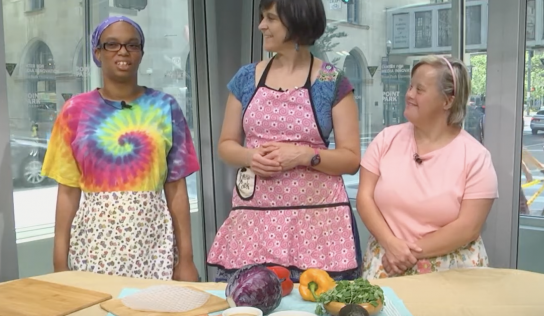
Veterans with disabilities are invited to join our award-winning effort to better integrate people of varying physical and intellectual abilities in news and feature podcast media. We call our work the All-Abilities Media Project.

DAV podcasts have covered its 30-year-old Winter Sports Clinic and the legal status of Agent Orange Exposure.

The Center for Media Innovation (CMI)  at Point Park University and Unabridged Press’ free podcast workshop for veterans with disabilities takes place Saturday, Aug. 10, from 9 a.m. to 3 p.m. Lunch is included. The CMI is in downtown Pittsburgh, at , on the corner of Third Avenue. Please apply at the link here by midnight July 31. 

“As the 30th anniversary of the Americans with Disabilities Act approaches, I hope more veterans with disabilities will take this opportunity to get involved in the public conversation about topics that can impact their quality of life,” says Jennifer Szweda Jordan, founder of Unabridged Press.

Military veterans are vastly underrepresented in newsrooms, according to the organization Military Veterans in Journalism. Only 1.1 percent of media workers are post-9/11 military veterans, the group says.

The Veterans Breakfast Club podcasts, including “Longest War,” are hosted by Nick Grimes, who served in the Army from 2004-2011. 

The program will include:

  • How to access and use professional and consumer recording and editing equipment.
  • How podcasting can become a professional skill–or even a job.
  • A panel of guests will discuss information related to veterans with disabilities.
  • Participants will be prepared for a recorded interview within the workshop.
  • Participants will participate in a podcast-style interview during the workshop. 
  • Some people may worry about getting their voices out in the public sphere. We’ll share information on the latest internet safety tips for veterans with disabilities.

Participants will also have the opportunity to talk one-on-one with an acclaimed national veterans affairs reporter in the fall, as well as joining in other networking opportunities.

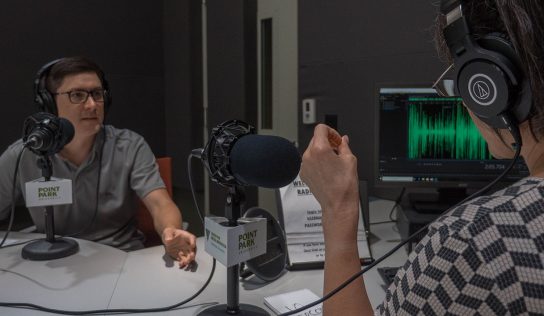
The Center for Media Innovation’s Podcast Studio. Photo: Chris Sichi.

Our previous media mentees have won multiple Golden Quill Awards from the Press Club of Western Pennsylvania, and their work has been broadcast on Pittsburgh’s top news radio station, 90.5 WESA. 

Improv Comedy + Down syndrome = Jobs?

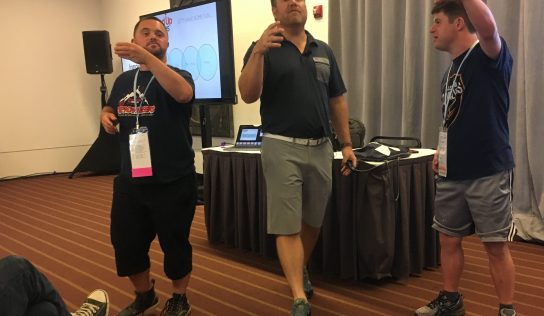
“Music!” Rob Snow shouts, echoing an audience member’s response to his request for an improv skit topic. Then he turns to three young adults with Down syndrome, points to one and says “Go!”

“Rap!” Nick Doyle responds first.

“Country!” says Dani Chase.

“I was gonna say country, too,” Chris Bean says. He gets a laugh from the crowd gathered at the National Down Syndrome Congress in Pittsburgh.

First round’s on Rob Snow! The founder of Stand Up for Downs led two men in a skit about toasting with imaginary cocktails they selected–the so-called drinks included a Bloody Mary. Click the triangle to hear Marisa Niwa’s interview with Snow. Photo: J.S. Jordan

For Snow, who started Stand Up for Downs, the comedy exercise is not just fun and games.

“Improv can be this missing link to creating more and more jobs for those with special needs,” he told Look Who’s Here! correspondent Marisa Niwa in an interview. “It teaches things like voice projection and eye contact. It teaches problem-solving and quick thinking, teamwork and focus. Those are all amazing skills that help people get new and bigger and better jobs.”

It’s been almost 30 years since the passage of the Americans with Disabilities Act and the integration of people with disabilities into public education. Yet unemployment remains double that of the rest of the populations. The job landscape remains relatively narrow for people with disabilities. Advancement opportunities are unlikely.

Rob Snow, at left, tells Marisa Niwa about his comedy skills organization Stand Up for Downs, which serves people with Down syndrome. They spoke at the National Down Syndrome Congress in Pittsburgh. Photo: Nick Tommarello. 

Snow trained in comedy at The Second City Theater in Chicago–the famed institution that launched many a Saturday Night Live Career. He got involved in what he calls the Down syndrome community after his son, Henry, was born with Down syndrome. Snow says it’s crucial to expand the job field for people with Down syndrome in part because this population is living longer.

“The dream is to create the program and for it to be adopted not just for people with Down syndrome but all special needs,” Snow says, “We can go from these ‘four Fs’ that they say–which is flowers, filth, factory and food for people with special needs, those types of jobs, to where we could grow bigger jobs. We could be leaders and creators and innovators and builders and team members.”

Snow offered case studies of how the students that he calls the Improvaneers are developing their skills and finding new jobs. Chase, for example, works at the amusement park Cedar Point, where she plays in a Peanuts character performance. She and Snow credit improv for helping her land the job.

This piece was produced by an All-Abilities Media Team with help from Nick Tommarello from Point Park University and the Center for Media Innovation at Point Park University. Another version of the audio first aired on The Confluence on 90.5 WESA, and can be found here.

‘Moving and Insightful’ Win

PITTSBURGH_For the second year in a row, our Look Who’s Here! founding host Erin Gannon won a Golden Quill award for audio journalism from the Press Club of Western Pennsylvania.

The judges described ‘A Wonderful Life:’ Raising a Child with Down syndrome” as “moving and insightful.” In the audio podcast episode, Gannon interviewed her parents, Nancy and Dr. Bob Gannon. The episode was recognized in the lifestyle category. The piece was edited by Shalace Moore for Unabridged Press. Erin received the award at press club’s awards dinner at the Rivers Casino on May 29. (She is pictured with her mother below.)

Daughter holding award and Mother at right.

Erin Gannon’s life mirrors a significant era in inclusion. She was in the first generation of people with disabilities mainstreamed in public schools. In the decades before Gannon was born, doctors had recommended people with Down syndrome leave their families and go to institutions where they received little or no education. That practice of segregation was becoming less common and Gannon’s parents wouldn’t hear of it.

“We would never tell you that you couldn’t learn something,” Nancy told Erin in the interview. “You’d have to figure that out for yourself eventually—that there were some things you would not be able to do, like driving a car.”

When Erin was born, Nancy reached out to a Sister of St. Joseph who was teaching kids with Down syndrome at St. Bernard’s Catholic School in Mt. Lebanon. This allayed Nancy’s fears as a new mom of a child with special needs.

Early on, Erin attended a Montessori School. She earned a high school degree, and now works part-time in communications at ACHIEVA and volunteers weekly at South Hills Interfaith Movement. She lives in a home with her two best friends, a home managed by Emmaus Community of Pittsburgh. Throughout her life, Erin has studied performing arts and has been a medalist with Special Olympics. She is on the board of PA Connecting Communities. 

“You have pretty much fulfilled all the dreams we had for you–in fact you exceeded them,” Bob Gannon said in the interview. “You’ve amazed us at some of the things you’ve accomplished–some of the places you’ve taken us. Like Special Olympics–going to Ireland to play in the World Games.”

The Quill award was bittersweet because Dr. Gannon died in December, after the publication of the interview.

Erin Gannon and the winning interview were featured recently in a popular Sunday column by the Post-Gazette’s Brian O’Neill—Erin Gannon is ready to interview anyone.

Speak Your Truth About Disability. We’re Listening.

Blue and red flyer representing themes that may be of interest to people with disabilities...medical marijuana, violence, housing and access
Flyer for Disability Listening Session

On April 4, people with disabilities are invited to speak freely to
journalists about their top news coverage priorities.


Storyburgh and Unabridged Press are co-hosting the event with sponsorship from the Bridge Pittsburgh Media Partnership at the Center for Media Innovation at Point Park University. News partners include PublicSource and the Northside Chronicle.


“As a disabled woman, I am frequently troubled by the language used to describe disability in the media,” says Alisa Grishman, founder of the event’s community partner, Access Mob Pittsburgh. “Terms like ‘wheelchair-bound’ and ‘no longer suffering’ still abound, and this forum
will be an opportunity for journalists to learn how to better serve our community.”

One in five people have a disability in America and anyone can become temporarily or permanently disabled at any time in their life.

“Speak Your Truth About Disability” will take place 6:30-8:30 pm at Riverview Presbyterian Church, , 15214, in Pittsburgh’s North Side. The roundtable conversations are off-the-record. Those who wish to have their stories documented will be invited to speak on record at the end of the event. Illustrator Emily Marko will capture story themes.

Recognizing that many people with disabilities face transit barriers, participation is welcome online via zoom web or phone call. Register to attend in person or remotely at Eventbrite.

Women as Keepers of the Holy Healing Land

Christianity has a mixed history when it comes to the environment, with Biblical interpretations ranging from utter dominance to strict conservation. Many Catholic women’s religious communities tend to take a maternal approach.

“Any land is a holy place,” says Sr. Sally Witt, of the Sisters of St. Joseph of Baden. “The land forms us and we form the land.”

At Standup Sisters: Green Habits 2 on March 11, Unabridged Press premiered short films of Catholic sisters exploring the healing power of nature. The event was live-streamed on Facebook from the Center for Media Innovation at Point Park University and is now available on YouTube (above).

Witt, a historian of Catholic sisters (pictured above) offered context about what’s often called eco-spirituality or eco-justice in women’s communities. Her community in Baden, an Ohio River town in Pennsylvania, is on an 80-acre campus. The Motherhouse grounds are home to beehives, chickens, and organic community gardens that fuel its EarthTones Ministry. The sisters sell honey and related natural products, and donate produce and eggs to the local poor. Sr. Witt’s community has spoken out against a new ethane cracker being built nearby that will process gas into plastic.

“I understand the sense of, ‘Yes, we wanted those skies to be smoky because that meant we were getting paid, and I understand where people were coming from in that,” Witt says. “At the same time, it’s a whole long-range thing. Yes, skies are smoky and that means money is coming in, or yes, we’re starting a new cracker plant and so that will create jobs in a place where jobs are certainly needed. And yet, you’re ruining peoples health in the process.”

At the Center for Media Innovation at Point Park University, guests asked about the tension between the tradition of extraction in Pennsylvania and conservationist values. Photo: Cole D’Alicandro

Energy reporter Reid Frazier joined the conversation, offering his view on the challenges faced by anyone seeking environmental change.

“What are the hurdles to a different kind of environmental vision for our society? I think a lot of that has to do with who has power in our society and who controls capital. And he or she who controls that seems to very often get their way in our society,” Frazier says. “Our state has sort of been set up to maximally extract whatever we can to feed it to the broader economy. Today it’s not steel so much anymore, it’s natural gas. And eventually it’s going to be plastic and chemicals. That is sort of the regime we’ve inherited…. Obviously in the last 40-50 years we’ve gotten a lot of environmental laws on the books, but I would see those as brakes on the accelerating train of capitalism.”

Frazier asked Witt how she squares the Biblical interpretation of domination of the environment with her community’s values.

“We’ve gone with the domination and look where it’s gotten us,” said Sr. Witt. “So we’re trying to look at creation. You’re very correct not everyone is looking at it in the same way. But those of us I guess you would call ‘green sisters’ and many of our friends, neighbors are looking at this. And you know what? It really isn’t just another way of doing things. It’s really basically, ‘What is creation about?’ ‘What is God calling us to?’ It really is a spiritual exercise.”

Energy reporter Reid Frazier, Sr. Sally Witt and Jennifer Szweda Jordan watch Sr. Agnes Therese Davis’ story during the Standup Sisters broadcast at the Center for Media Innovation. Photo: Cole D’Alicandro

Sr. Witt welcomed the audience to join the Sisters of St. Joseph for an Earth Day celebration on April 13 in Baden. Visitors can explore nature trails, see community gardens and chickens, and learn how honeybees help sustain the Motherhouse ecosystem . Live music, food truck fare, and interactive exhibits are part of the mix. Reid Frazier’s work can be found at the Trump on Earth podcast, The Allegheny Front, and StateImpact Pennsylvania.

March 11! Standup Sisters Premieres Short Films

PITTSBURGH_ As a changing climate, plastics in oceans, and food waste threaten people and planet, some Catholic sisters are working to raise awareness and reverse trends. Standup Sisters: Green Habits 2 on March 11, features several short films, and expert interviews, about women who preach what’s been called a “green gospel.”

“Catholic sisters have been de facto conservationists in America for centuries. They’ve tended farms to feed themselves and the poor,” says Jennifer Szweda Jordan, producer of Standup Sisters–a project of Unabridged Press. “Many sisters still promote environmental stewardship in their lives and ministries.”

This event will be held at the Center for Media Innovation at Point Park University at 7 pm Monday, March 11. It’s free with registration at Eventbrite, and will be live-streamed through Unabridged Press’ Facebook page and available after the event on YouTube. This is the fourth annual iteration of Standup Sisters, held during National Catholic Sisters Week and Women’s History Month.

Sr. Lyn Szymkiewicz, of the Sisters of St. Joseph of Baden, is featured in one segment. She’s a beekeeper, and the brainchild behind her community’s Earth Tones Ministry that procures eggs and harvests vegetables for food pantries, and produces honey.

Event includes live in-studio conversations with:

  • Sr. Sally Witt, a Sister of St. Joseph of Baden and author of A Hidden Spirit: The History of the Sisters of the Holy Spirit of the Diocese of Pittsburgh.
  • Reid Frazier, co-host of the Trump on Earth podcast, produced in Pittsburgh by The Allegheny Front (airing on 90.5 FM-WESA) and reporter for StateImpact Pennsylvania.
Sr. Lyn Szymkiewicz, of the Sisters of St. Joseph of Baden, at the beehives she tends. Photo: J.S. Jordan.

Point Park University, in downtown Pittsburgh, offers degrees in environmental studies and environmental journalism. This event is supported by National Catholic Sisters Week, which takes .

Look Who’s Here! Dashboard Jam with Broadway Vet Billy Hartung

Billy Hartung’s danced and acted on stages and screens from Pittsburgh to Broadway and back. His career began at the Center for Theater Arts–a performing arts school he now runs. He’s still acting around town, and at home, he plays a lead role as a husband and father of six.

Our Look Who’s Here! host Erin Gannon is known for her dancing–on the bus, while walking to work, and anywhere else fun music is playing. She, too, started her performing career at the Center for Theater Arts.

So it was only natural these two would come together for our first Dashboard Jam episode of Look Who’s Here! 

We reached out to Awesome Pittsburgh for funding. The central message of our pitch: People with disabilities often have the same human curiosity and joy in music and good conversation that connects us all, whether or not we identify as having a disability. The Awesome Pittsburgh folks said “Yes!” to our idea.

Our All-Abilities cast and crew and got to work. That crew includes Virtual Homey’s Matthew Torti on cameras and editing and ALVA Media’s Alex Collinger (a Joey Travolta Film Camp grad). We premiered the completed video on Jan. 30–a frigid day in our home base of Pittsburgh. We hoped it would warm our audience up!

We also have an audio-described version below for the visually impaired, or anyone who can benefit from an additional description.

Podcast Workshops Open for People With Disabilities

UPDATE: Limited openings available! If you’re interested, please apply ASAP.

PITTSBURGH_People with disabilities are invited to workshops teaching the art of news interviewing, and podcast and video technology–workshops led by seasoned pros and supported by skilled journalism students at the stunning Point Park University Center for Media Innovation.

By hosting these workshops, as well as events, Unabridged Press and the Center for Media Innovation support greater diversity in the public conversation about inclusion in education, work, and public safety. The workshops lead up to the 30th anniversary of the Americans with Disabilities Act in 2020.

In the Point Park studio Inclusion advocate Chaz Kellem is captured on camera by Point Park University’s Claire Costello

This effort builds on the success of Look Who’s Here! All-Abilities Media, in which hosts Erin Gannon, and Mark Steidl, won Golden Quill Awards in 2018 from the Press Club of Western Pennsylvania.

Workshops are coordinated by Unabridged Press’ Jennifer Szweda Jordan, who won ACHIEVA’s 2018 Yvonne Zanos Excellence in Media Award for her work with Erin, Mark, and others with disabilities.

“I’ve heard from many others who want to try podcasting to share the opportunities they’ve experienced–as well as to learn and circulate new information,” says Ms. Jordan. “I’ve also heard from professionals who want to help mentor participants with this groundbreaking project, including the author of the best-selling Miracle in the Andes Vince Rause! And the Center for Media Innovation is the best possible hub to bring everyone together.”

erin and neilImage: MLB Player Neil Walker during interview with Erin Gannon at Point Park University’s Center for Media Innovation.

At the first session, participants will be interviewed and learn to interview. The interviews will be recorded and edited by Point Park students. Participants will also select someone in the community they will interview in the second session. Examples include special education advocates and employment transition specialists. These interviews will also be recorded and edited. Interviews will be published to educate the community and inspire dialogue via Unabridged Press channels, and other news outlets in Pittsburgh, as well as at a public event in late 2019. Participant work may also be submitted for journalism awards.

These workshops are generously supported by FISA Foundation. The mission of FISA is to build a culture of respect and improve the quality of life for three populations in southwestern Pennsylvania: women, girls and people with disabilities.

Interested participants for this or future workshops can apply at this link. Application deadline for March workshops is midnight Feb. 14. Workshop fee is $75 per person for two sessions. Through the generosity of the FISA Foundation, subsidies are available if cost is a barrier. For more information, email

#MeToo Times Seven: Commentary

She was in a coma for more than a decade. And, yet, she gave birth–obviously raped months before.

The victim went into labor in the last days of 2018 in Arizona. Evidently no one had noticed the woman was pregnant before that time. Police are now investigating the crime that took place in a private nursing facility, called Hacienda Healthcare, in Phoenix.

If it sounds so bizarre that it might be what’s now called “fake news,” but, sadly, it’s not. People who are compromised mentally and physically are at great risk for abuse.

In fact, one group, people with intellectual disabilities are sexually assaulted more than seven times as much as those without disabilities, according to a 2017 NPR news investigation drawn from previously unpublished U.S. Justice Department data. This rate of intimate assault against people who have issues like Down syndrome is a little-known sidebar in the age of #MeToo. These numbers don’t even count abuses in group homes.

And yet, many of us bypass this kind of news. It may not sink in because we can’t relate.

Back of person with T-shirt with anti-assault logos

U.S. Army photo by Sgt. Ashley Bell.

“We do not value the lives of people with disabilities the way we value our own lives,” said Joe Shapiro, the longtime NPR disabilities reporter who led the investigation, and who recently spoke in Pittsburgh.

If you’re not convinced by Justice Department data, or NPR, let me add my voice to the chorus. I’m a longtime caregiver of adults with intellectual disabilities, and I can tell you that abuse is real–sexual, financial, physical, and emotional.

Sometimes it makes headlines. In 2016 in Pittsburgh, ACCESS van driver Daniel Burrelli was sentenced to 6 to 16 years in prison for repeatedly raping a passenger who had Down syndrome.

“I am a man,” Burrelli said in an affidavit. “I have physical needs.”

Abuse is certainly not happening daily to all of the people I work with, but for many, it will happen at some point in their lives. Repercussions can last many years, particularly for those who cannot verbalize what has happened to them.

The threats expand and morph. These days, those of us who care for people with intellectual disabilities must be aware of more opportunities to engage with the world that also come with risks–like social media. Many people with intellectual disabilities have mobile devices and Facebook accounts, and they may not see the harm in inviting a new online friend to the house. Some people with intellectual disabilities use Uber or Lyft, and some we could never imagine doing so safely.

Each time I learn of a new abuse, it’s a wakeup call. It infuriates me, and also makes me up my game to ensure I’m doing my best to help keep vulnerable people safe. The nearest I’ve been at the time of a potential abuse was when a man was obviously leering and standing too close–and then closer–to one of my charges while we were at a Rex Theater concert. The guy was pounding beers and seemed like bad news. I danced myself between them, and stayed there all night.

I’m certainly not perfect in my caregiving. Once I waited longer than I should have to question or report scratches on a person’s skin after that person visited someone. It didn’t turn out to be an issue, but a wise friend reminded me to ask myself if I was being neglectful. It’s a tough word–neglect–to hear applied to yourself. But hyper-vigilance is called for when caring for vulnerable people.

Naturally we all want people with disabilities to have as much engagement in the world as possible. And, of course, that comes with risks. There seems to be a media fascination lately with championing opportunities for sexual relationships among people with disabilities. Friends have asked me–often with a giggle that I read as a little salacious–if the people I care for have sex or date.

Some do. Some don’t. But for those of us who are closest to them–when we know someone can’t read the danger signals, well, we dance between them and possible harm.

Many won’t get this opportunity to walk with people with disabilities through these subtle or more obvious risks. But what many of us can do is to start paying attention to vulnerable people and the issues they face. We might even do this for selfish reasons. Most of us will have a disability if we live long enough. You or someone you love will likely end up relying on caregivers who come to the job with their own mix of goodness and vice. It only makes sense as a society to advocate utmost vigilance now in caring for people who cannot fully care for themselves.

A good place to start paying attention is by listening to Shapiro’s series on sex abuse of people with intellectual disabilities. It’s called Abused and Betrayed and features voices of people who were victimized. It won the National Center for Disability Journalism’s highest honor last year–first place in the Ruderman Awards for Excellence in Reporting on Disability. In fact, all the award winners warrant attention.

Here at Unabridged Press, we believe our project, Look Who’s Here! All-Abilities Media, will be a driving force in helping people with disabilities make their voices more prominent in the public conversation about their own welfare–which is really the welfare of us all. Please visit often as we share interviews about education, work, arts, health, public safety and more.

If you are a person with a disability who’s been abused, or want to learn more, here is one good resource.

Many Thanks from our Team

PITTSBURGH_Disabilities services provider ACHIEVA on Tuesday honored Unabridged Press and producer Jennifer Szweda Jordan with its Yvonne Zanos Excellence in Media Award for, in ACHIEVA’s words, “commitment in reporting issues that are important to people with disabilities and their families.”

The Unabridged Press project Look Who’s Here! All-Abilities Media equips people with disabilities to report on issues that impact their lives.


Ms. Jordan expresses thanks to the following:

  • ACHIEVA for this honor.
  • Look Who’s Here! founding host Erin Gannon and host and producer Mark Steidl, as well as other intrepid souls taking up the mic and asking questions.
  • Emmaus Community of Pittsburgh’s Executive Director Karen Jacobsen, all the hardworking Direct Support Professionals and everybody in between at this family-style living organization.
  • Maryann Januszkiewicz Jordan, for driving the production car during filmings, and endless support over many months.
  • Pete Jordan for inspiring a love of media, music, and production, and Deborah L. Jordan.
  • Danelle Ardell, for being the first sustaining contributor to Unabridged Press. 
  • Faustyna and David and Annmarie Fatula, and Cecilia Januszkiewicz and Al Figinski for their endless support.
  • Kara Holsopple, host of The Allegheny Front, for her example and words of encouragement.
  • Emily Lippert, whose lifelong speech therapy career is an inspiration and a source of information!
  • Tina Calabro, the first winner of this award, for sharing her wisdom from decades of work in disability journalism.
  • Point Park University Center for Media Innovation Director Andrew Conte and Development Director Kristin DeLuca.
  • WorkHardPGH coworking consultants, colleagues and friends Josh Lucas, Ryan Haggerty, Brian Conway.
  • For friendship and support: Phyllis Barber, Jenny Briggs, Sister Rhonda Miska, Rosemarie Perla, Amy Matz and Dominic Necciai, executive coach Rosemarie Perla, Tina Tolomeo Plaskonos, the Prevost family (especially Goddaughter Keira), Lisa Rotunda, and Mike Hren.
  • The FISA Foundation, particularly program officer Shani Lasin and board member Cheryl Kubelick, for helping advance the next phase of work–workshops at Point Park University for people with disabilities. Click here to join our email list to receive updates about this and other forthcoming work.