From Puddings to Pot

LISTEN! PRESS THE WHITE ARROW IN THE ORANGE CIRCLE AT TOP LEFT.

When James Coke was in his twenties, playing soccer suddenly made his left leg weak. Even walking became so painf, doctors confirmed what Coke suspected–he had Multiple sclerosis.

The diagnosis enhanced Coke’s passion for cooking, and for encouraging others to get in the kitchen for improved health. He branded himself “The Disabled Chef” and started blogging. The name “The Disabled Chef” was partly a play on words because of statistics that while the average person is not disabled, they are unable to cook more than six dishes from scratch. On the site, you’ll find recipes for low-cost meals like Pumpkin Soup and Spaghetti Bolognese.

“I’m not saying cooking has cured me from primary progressive Multiple Sclerosis (Ppms), it hasn’t–that’s confined me to a wheelchair,” Coke writes on his website. “But 20 years on from diagnosis, I’m still punching above my weight, holding the line and fueling my body the home-cooked way.

In an interview, Coke dished on his mom’s cooking, climate change, and medical marijuana. He spoke with Darah Thompson–who is curator of The Sweet Remedies online bakery based in Pittsburgh.

Since Thompson’s focus is desserts–most of which contain spirits like Hennessy in cinnamon buns–she asked Coke about his preferred sweets. One favorite is his wife’s blueberry baked cheesecake. They even add clotted cream, which, he half-jokingly adds, could cause a heart attack. His website also has a list of other treats.

And while American pies are more often considered dessert, that’s not the case across the pond. Coke says his mother cooked lots of savory English pies.

Yellow curry sauce coats vegetables such as cauliflower, carrots and broccoli topped with shredded coconut and fresh cliantro leaves in a white bow. From The Disabled Chef.
The vegetable curry that appears on The Disabled Chef website.

“There’s a couple recipes on my website for steak and ale pie, and she used to make a lovely, lovely pork pie,” he says. “She used to make great crumbles.”

Yet Coke doesn’t eat as much pork pie as he used to. His colorful curry vegetable recipe (pictured) is one way he tries to reduce the use of foods that may be less of a drag of the planet. Exotic dishes and spices like curry inspire him. 

“In society, we eat too much meat. I think we all have the opportunity to change,” Coke says. “The world is getting immersed by Co2, much of which is due to farm animals’ flatulence, so this dish is not only nice and healthy but good for your carbon footprint.” 

In his writing and videos, Coke also discusses universal kitchen design. His adjustable stovetop cranks up or down to accommodate his height seated in a wheelchair and that of his wife, who sautees while standing up.

Coke grew up eating local produce and eating fresh vegetables from his home garden that his parents would prepare. He still likes supporting local markets and maintaining a balanced diet. That doesn’t mean he’s not a fan of desserts.

A tan and smiling James Coke with close cropped hair and a grey short-sleeved dress shirt sits outdoors under a tiki roof at a table with red wine.
James Coke. Image Provided.

Besides writing about cooking, Coke’s a vocal advocate for medical marijuana. His writing on the subject is published in The Guardian

Coke says America is “light years ahead of where we are in the U.K.” in legalizing medical marijuana.” He says the only licensed cannabis drug in his home country is very expensive.

“It’s the one thing that is really good for my body,” Coke says of marijuana. “My spasms are better at night, I can sleep a lot better… it gives me more of an appetite.” 

Although Coke doesn’t use cannabis in his cooking, he says he might try it. A new muffin recipe might even be featured on his website.

A woman in a white blouse and black blazer has homemade desserts in her hand, including chess pie bites and glazed cinnamon buns. She's on the interview couch in the TV studio at the Center for Media innovation at Point Park University.
Sweet Remedies curator Darah Thompson is based in Pittsburgh.

The Center for Media Innovation at Point Park University in downtown Pittsburgh enables us to train people with disabilities in media and to publish their work. Free workshops are supported by The FISA Foundation.

On Bling, Being Bold, and Blindness: Molly Burke

If you watch Molly Burke on YouTube, you’ll learn about her birth control horror story, skydiving, and fashion. Her ‘Blind Girl Story Times’ may also grab your attention.

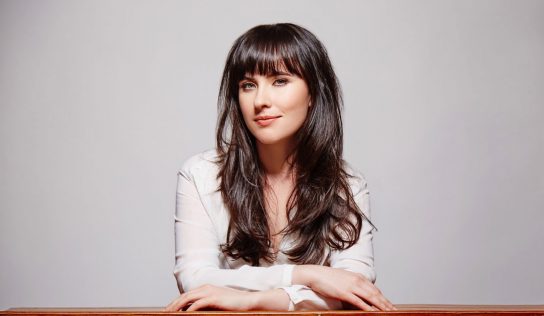
Molly Burke is a Canadian native who was diagnosed with retinitis pigmentosa (RP), at age 4. She lost the majority of her sight within 10 years. Burke is now a full-time YouTuber, public speaker, and advocate for people with disabilities. She’s speaking in Pittsburgh Thursday, Sept. 12.

Photo Courtesy: Molly Burke

“From a young age, most disabled people are told, in some way, that their life would be better if they were able-bodied, Burke says in an interview with Erin Gannon, host of Look Who’s Here!

Burke wants people with disabilities to hear a powerful message about their potential.

At the age of 20, Burke experienced a traumatic moment. During a microphone check for a public speaking event, she fell off a stage. That led to severe neck injuries. Burke says she developed PTSD and anxiety. At about the same time, her guide dog passed away. 

“It was hard to stay positive,” Burke said. “I felt like I had already gone through so much in my life–like how could this be happening again?”

Burke credited her strong support system for moving past obstacles. On her YouTube channel, Burke shows that people with disabilities are capable of having fun, taking risks, and achieving goals–just like anyone else. Burke shares that she’s been bullied, lost friends and dealt with depression because of her eye disease. So she learned how to do a lot of things on her own. She taught herself how to do makeup and find her sense of fashion by listening to others’ YouTube videos. 

“It was amazing to find this group of what felt like friends to me online and I always knew that one day I wanted to make people feel like that,” Burke says. “So when I was 20, I started my channel.”

That was five years ago. Burke now has almost 2 million YouTube subscribers for her videos about beauty, everyday life, and all things blind. Through her videos, Burke helps people learn about RP disease. One subscriber said she was able to notice the early signs of RP thanks to Burke’s channel.

Burke says that she’s adjusted to living with RP and doesn’t believe a cure would benefit her. In the future, Burke hopes to have her own fashion line, start a family, and live in her dream home.

Brianna McCall is a senior broadcast reporting major at Point Park University, and a practicum student working on the All-Abilities Media project with the Center for Media Innovation.