

Out of Institutions, Into the Workplace

By Keera Frye

“Without an eternal vigilance, without constantly challenging the status quo …We will go back to what we did before.”
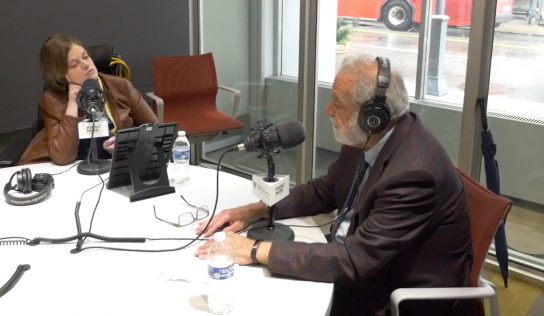
These are the words of Bob Nelkin, retired CEO of the United Way of Southwestern Pennsylvania. He said this as he reflected on his life’s work, in an interview conducted by disability rights advocate and healthcare ethicist Josie Badger, DHEC. 

From a young age, Nelkin advocated for people with disabilities–first as a student, then professionally for 50 years. His efforts directly contributed to the progress that society has made toward being inclusive.

Nelkin has often been a voice challenging and questioning how people with disabilities are treated and what opportunities they are offered in life. In the 1970s, Nelkin started an inclusive recreation program for children with disabilities who had been excluded from public education. Later, he was part of introducing the first group home to the Pittsburgh region and talking to community members who were opposed to or ‘on the fence’ about the group home.

Also in the 1970s, Nelkin led parents of people with intellectual disabilities on visits to mental institutions. They would demand to be let inside the most hidden parts of institutions. Nelkin recounted seeing cages the medical staff built in the institution to house people deemed unmanageable. Officials at Polk State Center used the word “playpens” to describe the same devices, even though they held adults.

These mistakes and mistreatments were revealed to the public via journalists. Nelkin cites the impact of news reports in the Pittsburgh Press by Delores Frederick and the Post-Gazette’s Henry Pierce. Pierce, for example, wrote of a University of Pennsylvania doctor who was testing meningitis vaccines on institutionalized youngsters. Many of the news clippings and letters Nelkin kept from this era are available online on history sites.

“Journalism played a central role,” Nelkin says. “Without the embarrassment of the officials about what was happening on their watch, we might be back where we were in the 1960s in the early 1970s. It was that ability to confront people with the truth. Journalism at its best does that.”

An almost complete reversal of the practice of institutionalization took place in the years that followed. Very few of these facilities remain open today. Some families of those with disabilities and health professionals do still favor the institutional model. There are those who say home settings are typically unable to support, for example, people who some call “medically fragile”–a term not without controversy.

The image links to a website for a disability employment campaign called I Want To Work
These images are from the campaign Badger manages for the United Way to create access to work for people with disabilities. It’s a social media self-advocacy campaign powered by young Pennsylvanians with disabilities, who post selfie images along with the #IWanttoWork hashtag printed on a card available online.
Three people, two of which have signs stating with the hashtag I want to work.
Josie Badger at left, leads the United Way campaign #IWantToWork. She’s pictured with disability rights advocate Josh Stranix, and PA Sen. Bob Mensch ,who was a lead sponsor of the Employment First legislation Badger and others sought. Photo: Twitter @IWantToWorkPA

As the 30th anniversary of the passage of the Americans with Disabilities Act approaches, Nelkin points out there is still great disparity in employment. Badger said that only 38 percent of working-age Americans with disabilities are employed–compared to 75 percent of those without disabilities. 

Under Nelkin’s leadership and with help from Badger, that has been a focus of the United Way. Badger has managed United Way’s viral #IWantToWork campaign–which aims to ensure work opportunities for all people with disabilities.

“What’s missing,” Nelkin said, “is seeing people with disabilities as a great asset–as people who have a great amount to contribute to society.”

This story was made possible by our All-Abilities media partnership with the Center for Media Innovation at Point Park University in downtown Pittsburgh. The partnership’s work is supported by the generosity of the FISA Foundation.

Veterans with Disabilities: Welcome to Podcast Workshop

What’s your war story? What questions do you have about life after military service? How do you convey these stories and questions?

Veterans with disabilities are invited to join our award-winning effort to better integrate people of varying physical and intellectual abilities in news and feature podcast media. We call our work the All-Abilities Media Project.

DAV podcasts have covered its 30-year-old Winter Sports Clinic and the legal status of Agent Orange Exposure.

The Center for Media Innovation (CMI)  at Point Park University and Unabridged Press’ free podcast workshop for veterans with disabilities takes place Saturday, Aug. 10, from 9 a.m. to 3 p.m. Lunch is included. The CMI is in downtown Pittsburgh, at , on the corner of Third Avenue. Please apply at the link here by midnight July 31. 

“As the 30th anniversary of the Americans with Disabilities Act approaches, I hope more veterans with disabilities will take this opportunity to get involved in the public conversation about topics that can impact their quality of life,” says Jennifer Szweda Jordan, founder of Unabridged Press.

Military veterans are vastly underrepresented in newsrooms, according to the organization Military Veterans in Journalism. Only 1.1 percent of media workers are post-9/11 military veterans, the group says.

The Veterans Breakfast Club podcasts, including “Longest War,” are hosted by Nick Grimes, who served in the Army from 2004-2011. 

The program will include:

  • How to access and use professional and consumer recording and editing equipment.
  • How podcasting can become a professional skill–or even a job.
  • A panel of guests will discuss information related to veterans with disabilities.
  • Participants will be prepared for a recorded interview within the workshop.
  • Participants will participate in a podcast-style interview during the workshop. 
  • Some people may worry about getting their voices out in the public sphere. We’ll share information on the latest internet safety tips for veterans with disabilities.

Participants will also have the opportunity to talk one-on-one with an acclaimed national veterans affairs reporter in the fall, as well as joining in other networking opportunities.

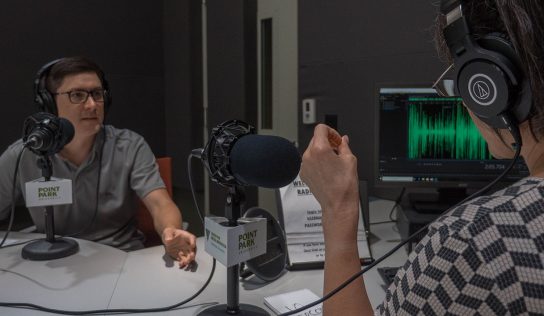
The Center for Media Innovation’s Podcast Studio. Photo: Chris Sichi.

Our previous media mentees have won multiple Golden Quill Awards from the Press Club of Western Pennsylvania, and their work has been broadcast on Pittsburgh’s top news radio station, 90.5 WESA. 

Improv Comedy + Down syndrome = Jobs?

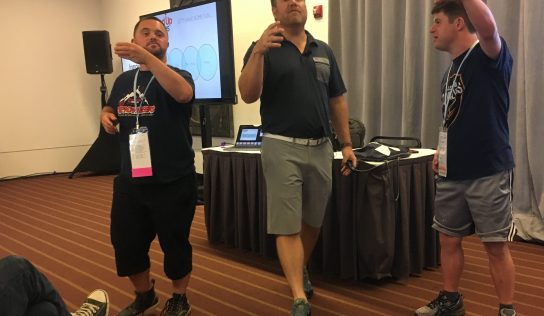
“Music!” Rob Snow shouts, echoing an audience member’s response to his request for an improv skit topic. Then he turns to three young adults with Down syndrome, points to one and says “Go!”

“Rap!” Nick Doyle responds first.

“Country!” says Dani Chase.

“I was gonna say country, too,” Chris Bean says. He gets a laugh from the crowd gathered at the National Down Syndrome Congress in Pittsburgh.

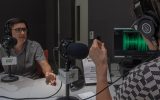
First round’s on Rob Snow! The founder of Stand Up for Downs led two men in a skit about toasting with imaginary cocktails they selected–the so-called drinks included a Bloody Mary. Click the triangle to hear Marisa Niwa’s interview with Snow. Photo: J.S. Jordan

For Snow, who started Stand Up for Downs, the comedy exercise is not just fun and games.

“Improv can be this missing link to creating more and more jobs for those with special needs,” he told Look Who’s Here! correspondent Marisa Niwa in an interview. “It teaches things like voice projection and eye contact. It teaches problem-solving and quick thinking, teamwork and focus. Those are all amazing skills that help people get new and bigger and better jobs.”

It’s been almost 30 years since the passage of the Americans with Disabilities Act and the integration of people with disabilities into public education. Yet unemployment remains double that of the rest of the populations. The job landscape remains relatively narrow for people with disabilities. Advancement opportunities are unlikely.

Rob Snow, at left, tells Marisa Niwa about his comedy skills organization Stand Up for Downs, which serves people with Down syndrome. They spoke at the National Down Syndrome Congress in Pittsburgh. Photo: Nick Tommarello. 

Snow trained in comedy at The Second City Theater in Chicago–the famed institution that launched many a Saturday Night Live Career. He got involved in what he calls the Down syndrome community after his son, Henry, was born with Down syndrome. Snow says it’s crucial to expand the job field for people with Down syndrome in part because this population is living longer.

“The dream is to create the program and for it to be adopted not just for people with Down syndrome but all special needs,” Snow says, “We can go from these ‘four Fs’ that they say–which is flowers, filth, factory and food for people with special needs, those types of jobs, to where we could grow bigger jobs. We could be leaders and creators and innovators and builders and team members.”

Snow offered case studies of how the students that he calls the Improvaneers are developing their skills and finding new jobs. Chase, for example, works at the amusement park Cedar Point, where she plays in a Peanuts character performance. She and Snow credit improv for helping her land the job.

This piece was produced by an All-Abilities Media Team with help from Nick Tommarello from Point Park University and the Center for Media Innovation at Point Park University. Another version of the audio first aired on The Confluence on 90.5 WESA, and can be found here.

Inspiration Porn, Cliched Sighs: Media Missteps

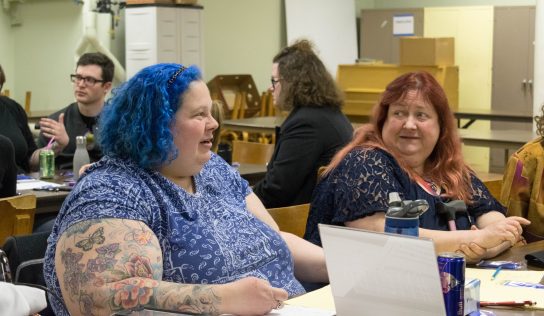
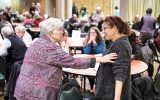
Woman at left with blue hair smiling and talking in a church hall. A woman at her right listens intently. Others in the room are talking as well.
Alisa Grishman, who heads Access Mob, at left, talks about her experiences with disabilities. Photo: Mia Trang Patterson, Center for Media Innovation at Point Park University.

April is “blue hell month,” for one woman who has autism spectrum disorder. It’s been deemed “Autism Awareness Month” by one camp of autism advocates. That camp encourages people to “light it up blue” to celebrate. Instead, the woman said, she and others witness an onslaught of media they consider “inspiration porn”–images and stories portraying people with disabilities unwittingly as motivational figures.

“Disability is part of human life. It’s normal.”

– Alisa Grishman, Access Mob

Disability advocates and supporters shared this and other frustrations about media coverage at a listening session called “Speak Your Truth About Disability” in Pittsburgh’s North Side. This event was hosted by Unabridged Press and Storyburgh and sponsored by the Pittsburgh Bridge Media Partnership. Journalists from PublicSource and Northside Chronicle attended as well. Access Mob Pittsburgh also partnered by bringing its constituents to the discussion. Artist Emily Marko documented the conversation graphically (click image below to see in detail).

Alisa Grishman, who heads Access Mob, discussed ways to better communicate with the media. Grishman said that the February death of Pittsburgh’s longtime Americans with Disabilities Act coordinator Richard Meritzer has resulted in a loss of information for the disability community. Grishman is working to rebuild Meritzer’s email list. Another outcome of the session was the idea that the disability community could create a database of subject matter experts for reporters to consult in news stories. One man who came to the event in support of his wife, who has a disability, said that journalists could even consult the list if a story has nothing to do with disability, in order to ensure inclusion of people who are typically excluded.

Another woman with autism criticized the demeanor of TV news hosts reporting on autism: “There’s this great sigh,” she said, then newscasters say, “And he’s autistic.”

Colorful doodle-style drawings capturing key ideas from evening event.
Click image above to enlarge and see how artist Emily Marko captured ideas from the event.

Besides inspiration porn, other frustrations for people with disabilities were hardships accessing medical care, including marijuana now legal in Pennsylvania and other states. One group discussed topical events like the Tree of Life shooting. They said news coverage focused on the shooter’s mental illness more than on his white supremacism. They said that while bullying is sometimes blamed for mass shootings, people with disabilities are often bullied, but rarely perpetrators of violent crime.

Grishman summed up why journalists should be sure to include people with disabilities.

“Disability is a part of human life,” said Grishman. “It’s normal.”